Importance of Risk Management in Gold Trading
Risk management is often considered a foundational element of sustainable trading activity, particularly in markets as dynamic as gold. Gold prices can respond rapidly to a wide range of macroeconomic and geopolitical inputs, which means that participants who do not account for this sensitivity may face outcomes that are difficult to anticipate or absorb.
The gold market is influenced by a broad combination of factors including central bank interest rate decisions, inflation data, currency strength — particularly the U.S. dollar — and geopolitical tension. These inputs can produce sharp, sudden price movements that affect open positions across all time frames.
Risk management is the foundation upon which traders minimize losses and protect their capital. Without a clear understanding of potential downside scenarios, even technically sound trade ideas may produce unfavorable outcomes due to unexpected market behavior.
Characteristics of Gold Market Volatility
Gold market volatility is shaped by a diverse set of inputs that can vary significantly across different economic environments. Safe-haven demand, driven by uncertainty in equity markets or geopolitical events, has historically caused gold prices to rise sharply within short periods.
Common sources of price fluctuation in gold include:
- Central bank policy announcements and forward guidance
- Inflation data releases, particularly CPI and PCE figures
- Employment reports such as the U.S. Non-Farm Payrolls
- Geopolitical conflicts or sudden diplomatic tensions
- Shifts in the U.S. dollar index
- Changes in real interest rate expectations
- Global equity market stress or systemic risk events
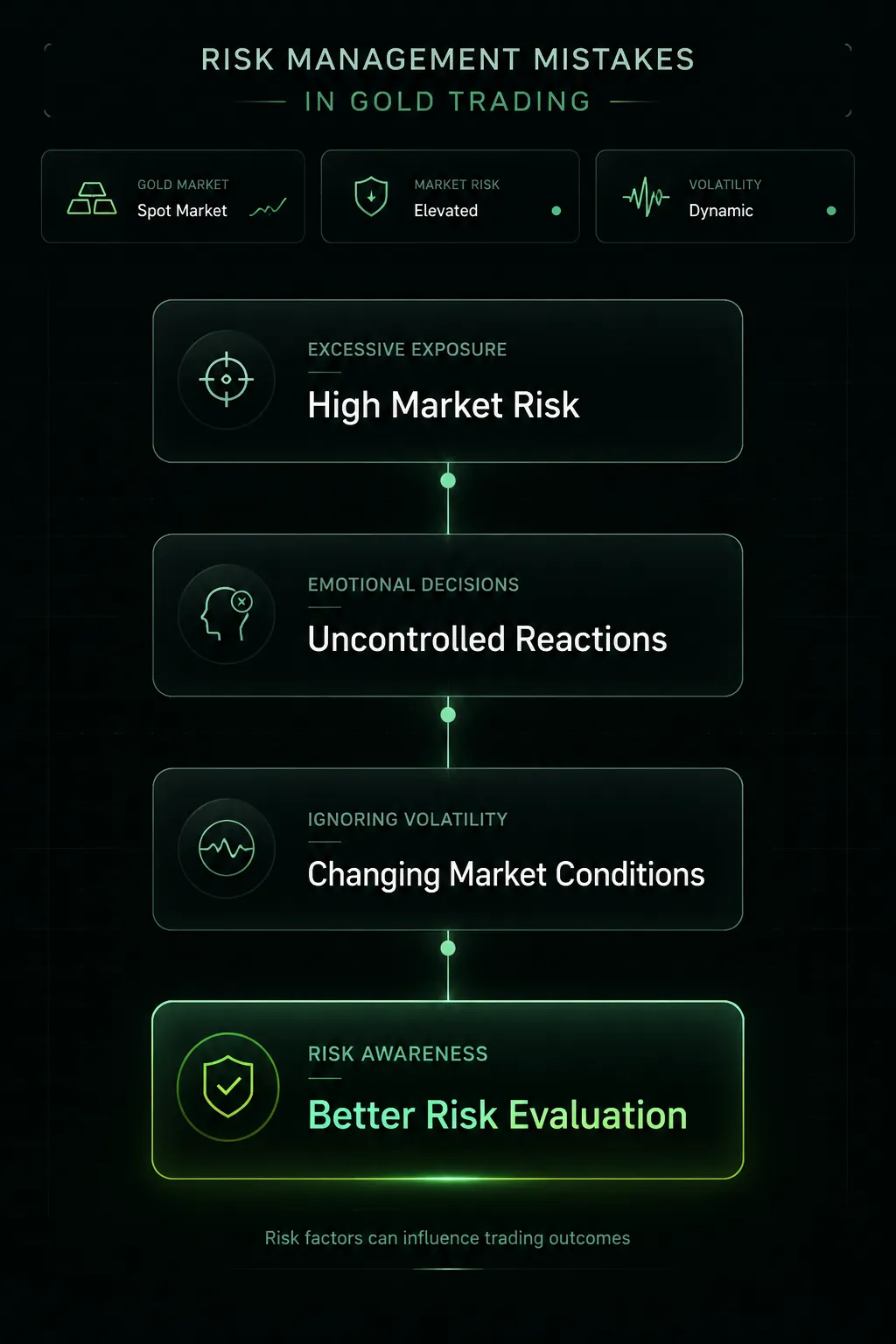
Volatility in gold markets may differ significantly between periods of calm and periods of macroeconomic stress. During quiet market conditions, price movements may be contained and predictable. During high-uncertainty periods, gold moves can be both larger and more erratic.
Impact of Leverage on Gold Trading Exposure
Leverage allows traders to control a larger position in gold than their deposited capital would otherwise permit. A leverage ratio of 1:20, for example, means that a $1,000 deposit can control a $20,000 position. This structure increases exposure to both favorable and adverse price movements in equal proportion.
For beginner traders, leverage is among the most commonly misunderstood concepts in CFD and futures trading. Leverage does not change the probability of a trade being correct. It changes the magnitude of financial consequences when price moves against an open position. Because it carries significant risk, leverage can result in losses that exceed the original deposit in certain account types.
Relationship Between Market Risk and Capital Preservation
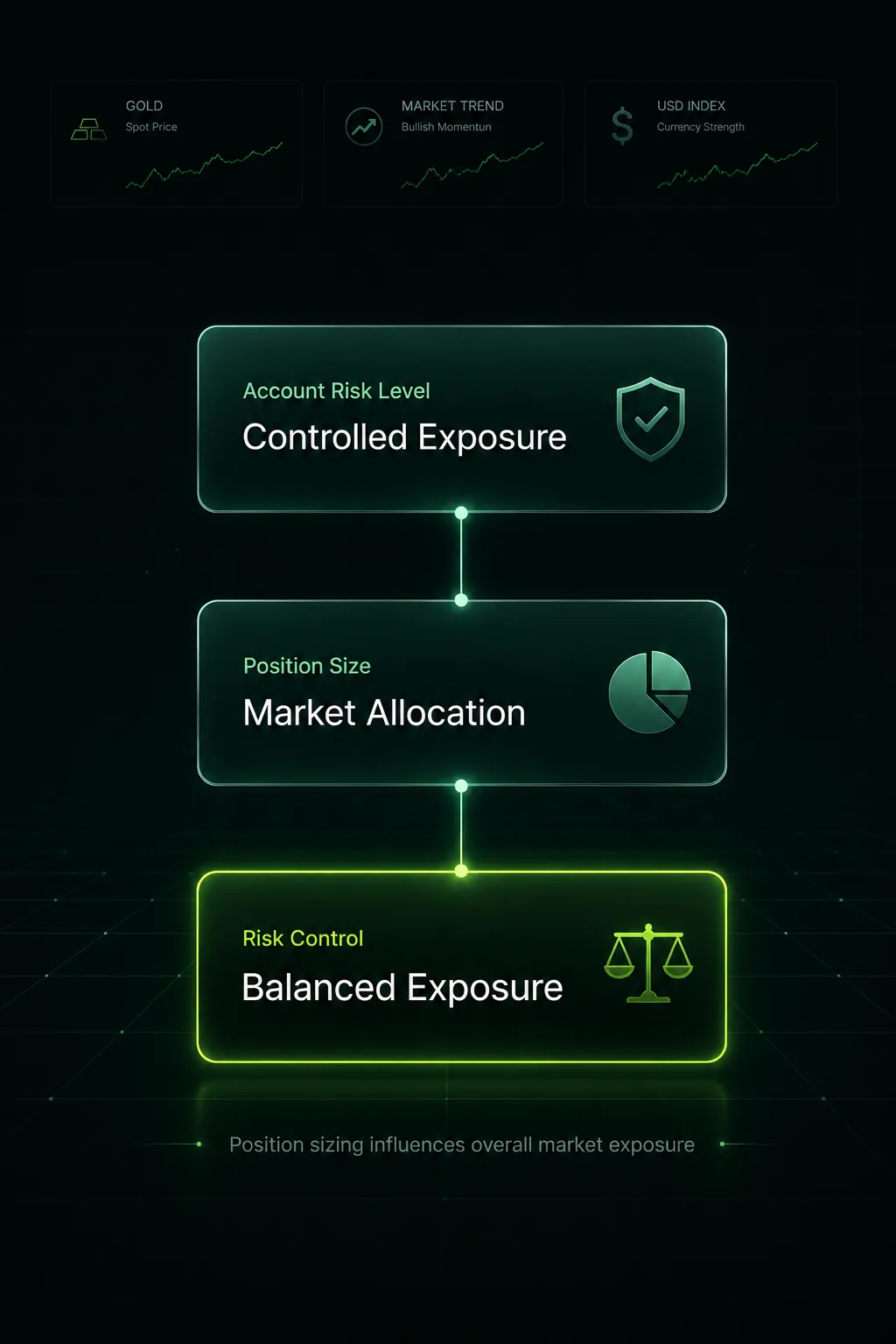
Capital preservation is one of the most frequently discussed goals within risk management frameworks. The concept refers to protecting the overall trading account from drawdowns severe enough to limit future participation in the market.
Market risk — defined as the possibility that an asset's price moves unfavorably — is present in all gold trading activity. Risk management helps traders to make informed decisions about how much of their capital they expose to this risk at any given time. Limiting risk per trade is often described as one of the core principles associated with long-term account sustainability.